Part Four of Ancient Alban/Scotland now Available on Amazon!
In this exciting Magical issue you will learn about the Black Stewarts and their ancient African traditions through primary evidence.
Discover the true power of alkhemical transformation from your unique biology and the history of real knowledge of self.

https://www.amazon.co.uk/School-Never-Teach-school-never/dp/B0BZFLRBG5/ref=tmm_pap_swatch_0?_encoding=UTF8&qid=1680344343&sr=8-4
Fourth Instalment of the Black Rulers of Scotland Coming Soon…

We are in now in the age of Knowing. It is time to teach our children and youth true history and knowledge of self.
Scotland’s First Settlers were Black…
Scotland’s First Settlers Were Black…

But what do mainstream reporters continue to do? Yes, you’ve guessed it they describe this indigenous Black Scot as ‘a slave’. Read the evidenced research in MFIT’s series on Scotland and issue 12 on Alban’s Black Rulers.
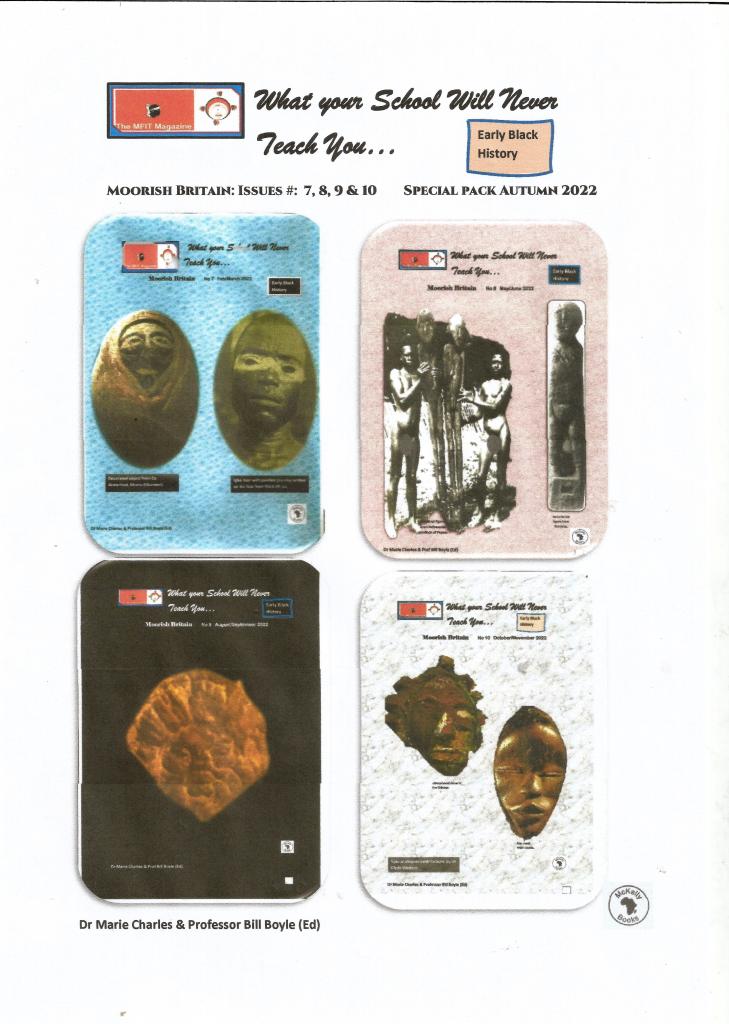

Another example of the distortion of TRUE history.


This 1920s racist caricature has been given life in 2022 at a recent book launch in Edinburgh (11th December), celebrating ‘Black Lives in Scotland’. The ‘rolling white eyes’, and ‘enlarged red lips’ can be seen on the t-shirt on the Black woman being embraced by the Black authors of the book.
The media res paradigm, as represented by their book, begins with contemporary Black experiences from the 1980s. These experiences perpetuate the myth of Blacks ‘not belonging’, resulting in the deliberate and confused questioning of one’s notion of ‘nationhood, Scottishness and Britishness‘. This premature, dichotomous narrative is a popular one and strongly supported by the power structure and many historically uniformed Black academics. Even when other Black academics reach out in solidarity (recent communication), it is immediately severed and shut down.

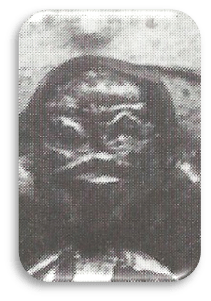
These are the faces of evidenced indigenous Blacks of Scotland that the status quo, such as Edinburgh University, do not want you to SEE. Baba Asa Hilliard reminds us: “Even when those among us rescue our culture, we have a greater appetite for the culture of people other than ourselves”.
When will YOU break the loop of the controlled cycle of centralised disinformation? If not now WHEN? If not you WHO?
Read The Truth: Foundational Black Britons (FBBs).

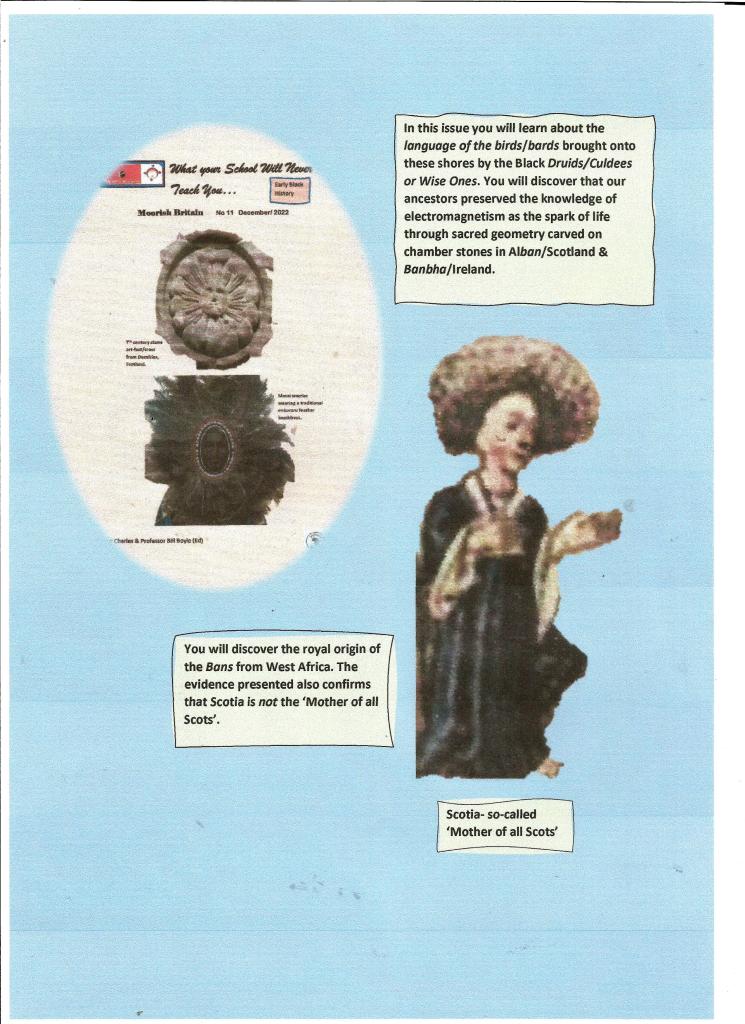
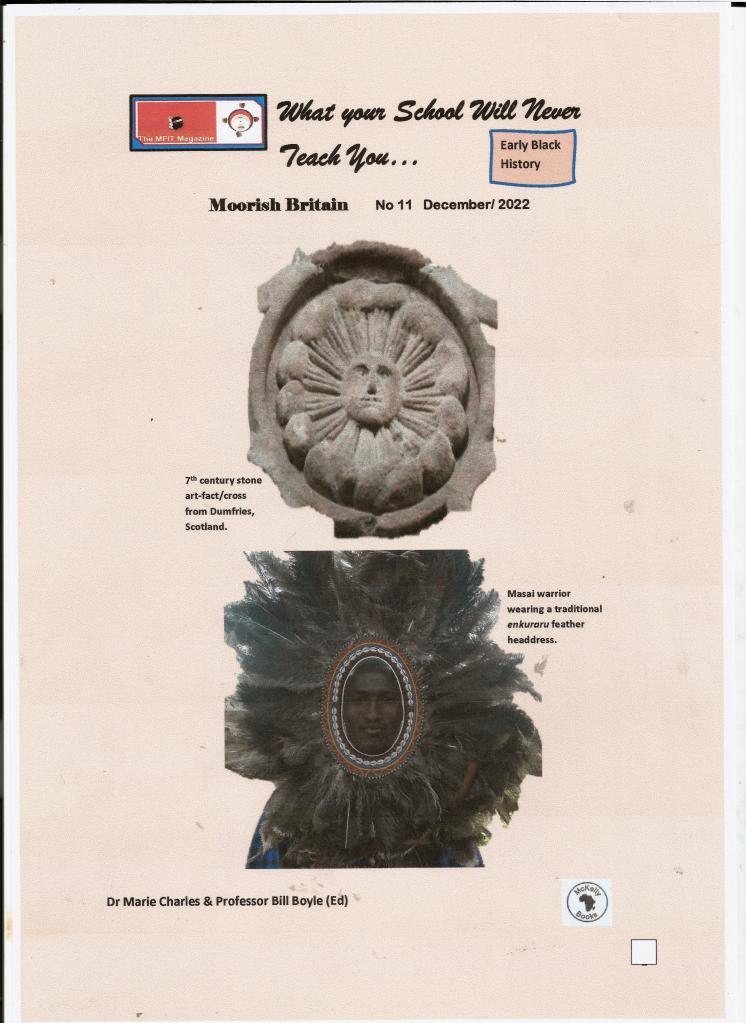
Bumper issue # 11 (part three) of ancient Scotland available NOW:
https://www.amazon.co.uk/gp/product/B0BNYRVLJB?ref_=dbs_m_mng_rwt_calw_tpbk_8&storeType=ebooks&qid=1670238341&sr=8-2
Do you want to know the true history of Baratanac (Britain)?
Do you want your child to know the cultural gifts created by FBB?
Do you want to have correct knowledge of self to become an empowered & autonomous individual?
Do you want to have an evidenced resource at your fingertips?
Then access the research contained in the Missing Faces In Teaching Magazine. Each issue builds upon a multimodal approach with primary sources: artefacts, images and historical literature to prove that Alban’s primordial settlers were Black.

https://mfit.productions

Issue # 11: What Your School Will Never Teach You-(part 3 of ancient Scotland).
Do you want to know the true history of Baratanac (Britain)?
Do you want your child to know the cultural gifts created by FBB?
Do you want to have correct knowledge of self to become an empowered & autonomous individual?
Do you want to have an accessible evidenced resource at your fingertips?
Then access the research contained in the Missing Faces In Teaching Magazine. Each issue builds upon a fresh and exciting multimodal approach with primary sources: artefacts, images and historical literature to prove that Alban’s primordial settlers were Black.

“History does reveal that a major Black betrayal of indigenous origin certainly took place”.
Follow the evidence trail from issues #1-10 of Foundational Black Britons (FBB).
https://www.amazon.co.uk/MFIT-Magazine-Scotland-Decolonizing-Curriculum/dp/B0BNYRVLJB/


 Missing Faces In Teaching (MFIT)
You must be logged in to post a comment.